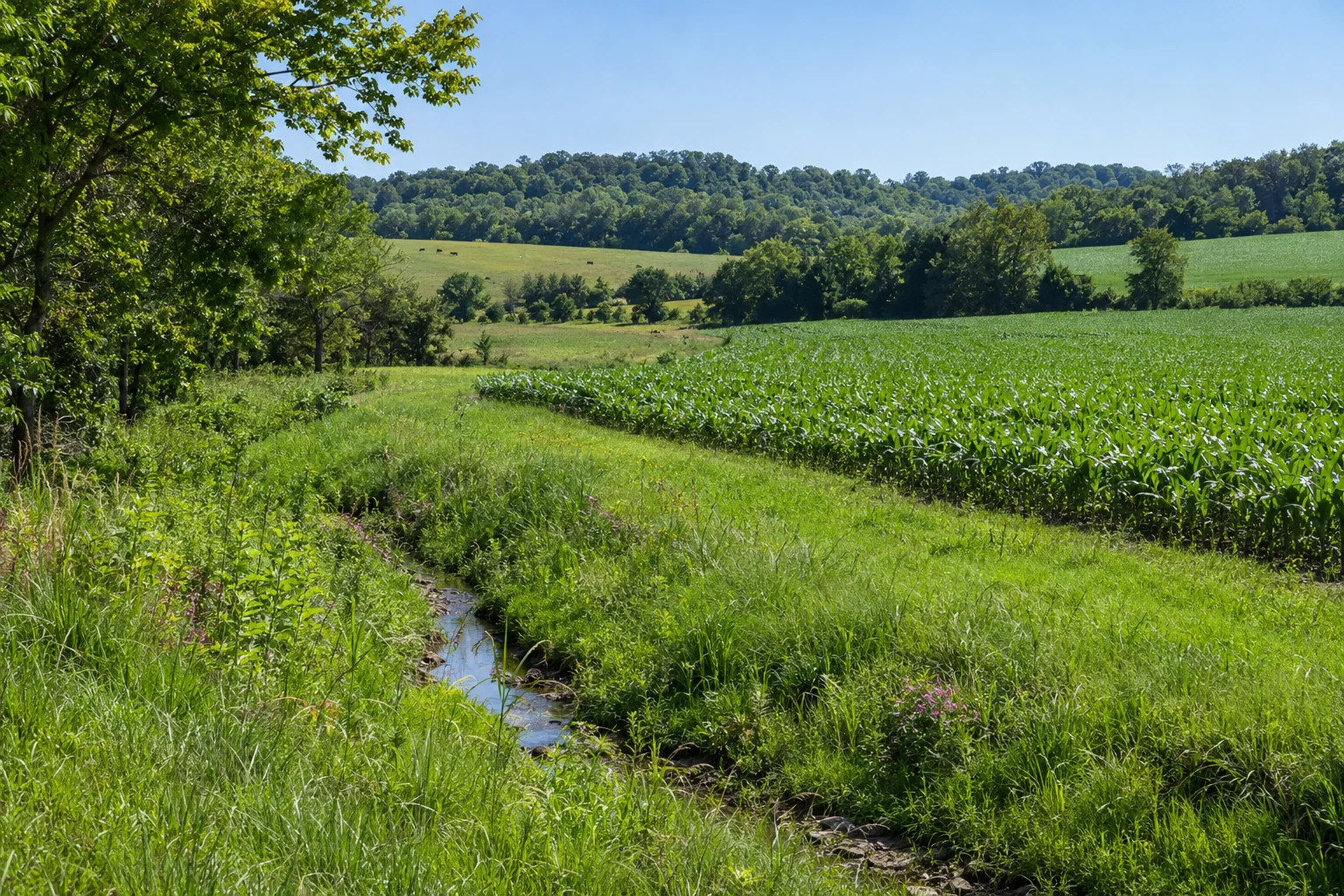
We've been farming this ground for generations, and I'd like Julie and me to leave it in good shape for whoever farms it after us.
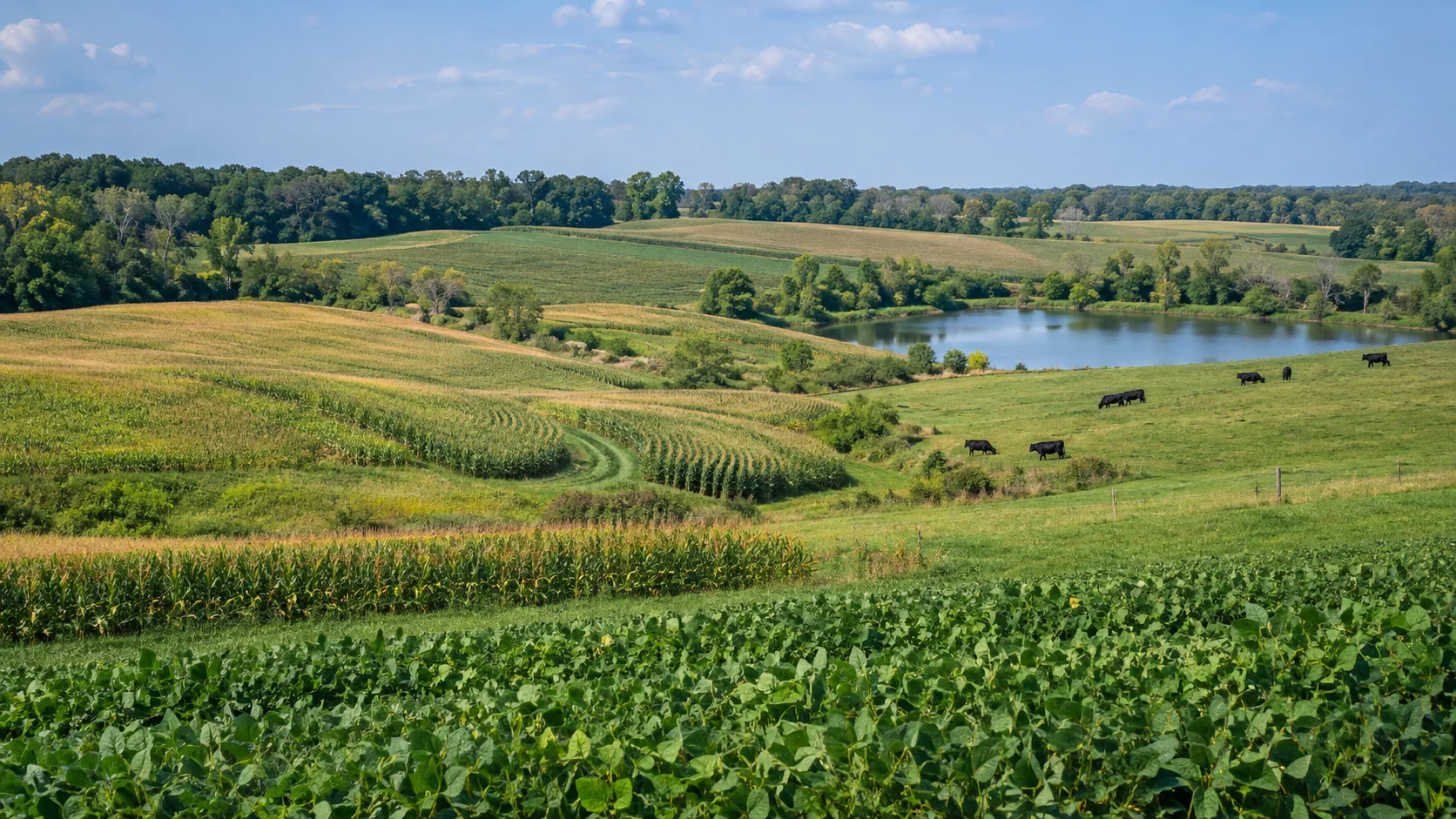
The crop fields, pastures and ponds aren't independent of each other. If we lose grazing because of dry weather, for instance, we'll have to make up the difference with hay or purchased feed.
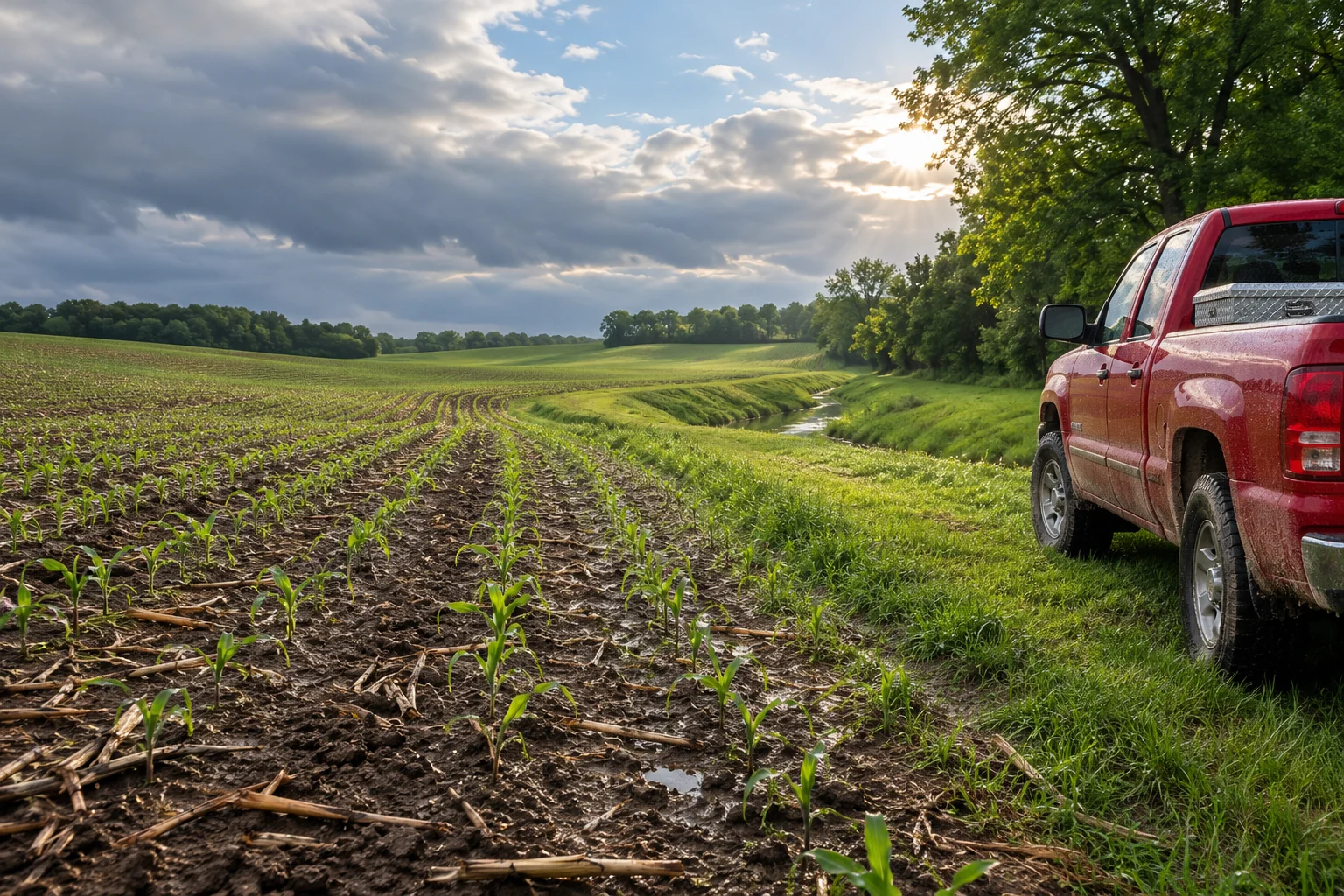
Yields tell me something about the fields, but so does a walk after a hard rain. I want to see where the water went and whether it carried any soil with it.
I watch the edges where the fields meet the pastures and timber. That's often where a drainage problem first shows up.
Checking the ground
The calendar's useful for planning, but a spade tells me more about whether a field's fit to plant. I check more than one spot, especially on sloping ground.
After a hard rain I look for places where water has cut through the residue or carried soil off a slope. I also watch for compacted areas and spots where weeds are getting ahead of us. It's useful to compare those places with what we've got in the field records from previous years.
I've made enough ruts to know that driving on wet ground can leave problems that last well beyond the next dry spell.
Soil, residue and cover
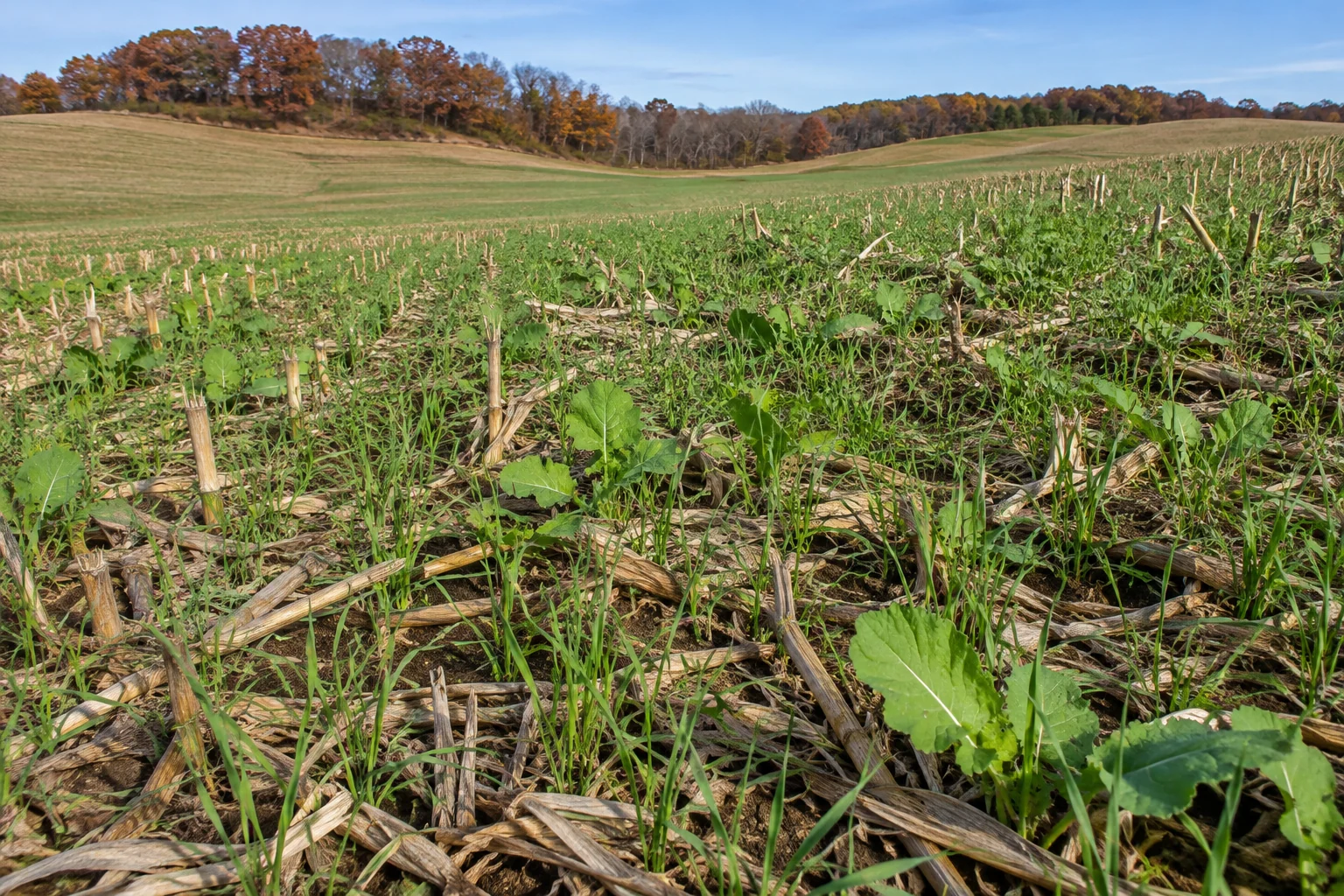
I don't mind seeing corn stalks or wheat stubble left on the surface. The residue helps protect the soil from rain, slows runoff and helps keep some moisture in the ground. I don't need a field to look freshly worked after every crop.
Rye and radishes are useful cover crops where they fit our rotation. They keep the ground covered, and their roots can help improve soil structure without another tillage pass.
I like soil that breaks apart fairly easily in my hand. If water's sitting on the surface after a rain or the ground's sealing over, I'll take a closer look before deciding what to do next.
Water, ponds and pasture
The ponds matter
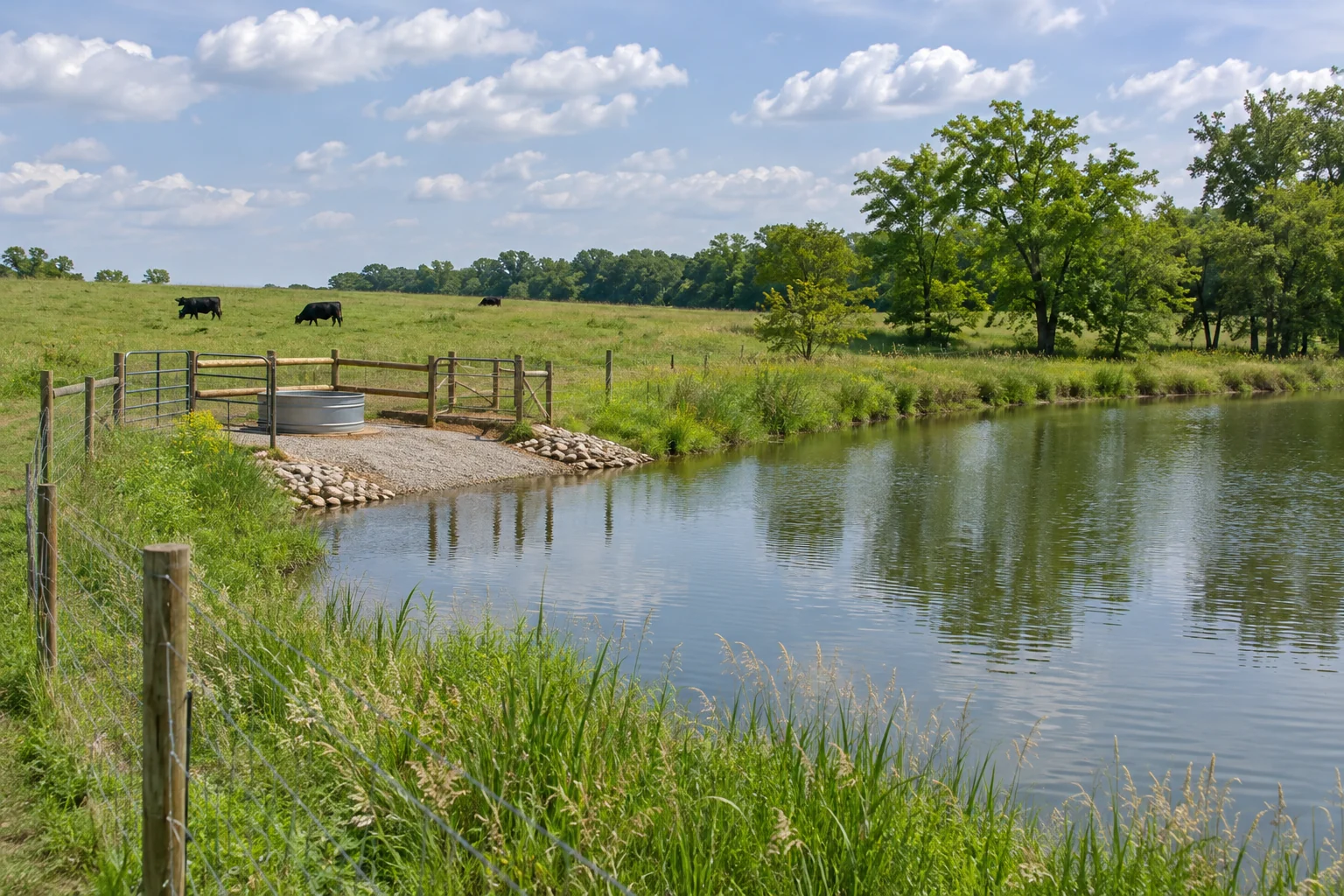
The ponds are useful for livestock water in dry weather. I keep an eye on the banks and the places where the animals can reach the water. A little muddy spot can get quite a bit bigger if we let it.
Keeping water moving cleanly
I know where a lot of the water goes when we've had a hard rain. We try to keep grass in the waterways and leave some vegetation along the edges of the fields and timber. I'd rather keep our topsoil in the field than have to deal with it farther down the slope.
Giving the grass time to come back
When we move livestock off a pasture, I want enough grass left for it to recover. How soon we can bring the animals back depends on the season, the moisture we've had and how fast the grass is growing. We can't count on a July pasture to come back as quickly as it did in May.
If the grass isn't keeping up with the animals, we've got to adjust. That's one of the reasons I keep track of our hay supply as well as the condition of the pastures.
Timing, inputs and fewer passes
If we've got rain in the forecast, I'll consider whether it's worth starting a job that might be interrupted. There are usually other things we can get on with if the ground's too wet.
I try to make each trip across a field count. Before we spread manure, lime or another amendment, I want to know what the field needs and whether we can get across it without doing damage. If we can get a job done well with fewer passes, we'll save some fuel and put less traffic on the ground.
I take much the same approach to sprays. I want to know what we're trying to control and whether it's the right time to be applying something.
Leaving a field alone
There are fields where we've been able to cut back on tillage, and others where we'll still need to work the ground. I don't see any reason to do exactly the same thing on every acre just because we've got the equipment hooked up.
What I keep track of
I keep records of the crops we've planted, what we've applied, the weather, harvest and any trouble spots I've noticed. I can usually remember that a field gave us trouble, but I can't always remember which year it was or exactly what we'd done to it beforehand.
After a few seasons of records, it's easier to see which fields warm up first in spring, where we tend to have wet spots and which pastures take longer to recover. Those notes are particularly useful when we're making plans over the winter.
Air temperature, soil temperature, soil moisture and recent rainfall are all useful to me. Regional readings give me a place to start, but I still want to see what the ground's like on our own farm.
When I go back to a pasture or field after a year or two, I want it to be at least as good as I remember it.
It's not always the quickest way to get a job done this week, but it'll make a difference when we come back to the same field next year.