I don't suppose I'd have written either of these books if I hadn't spent so much time around livestock and farm machinery.
In each case I thought I'd find a fairly straightforward answer. I was wrong on both counts.
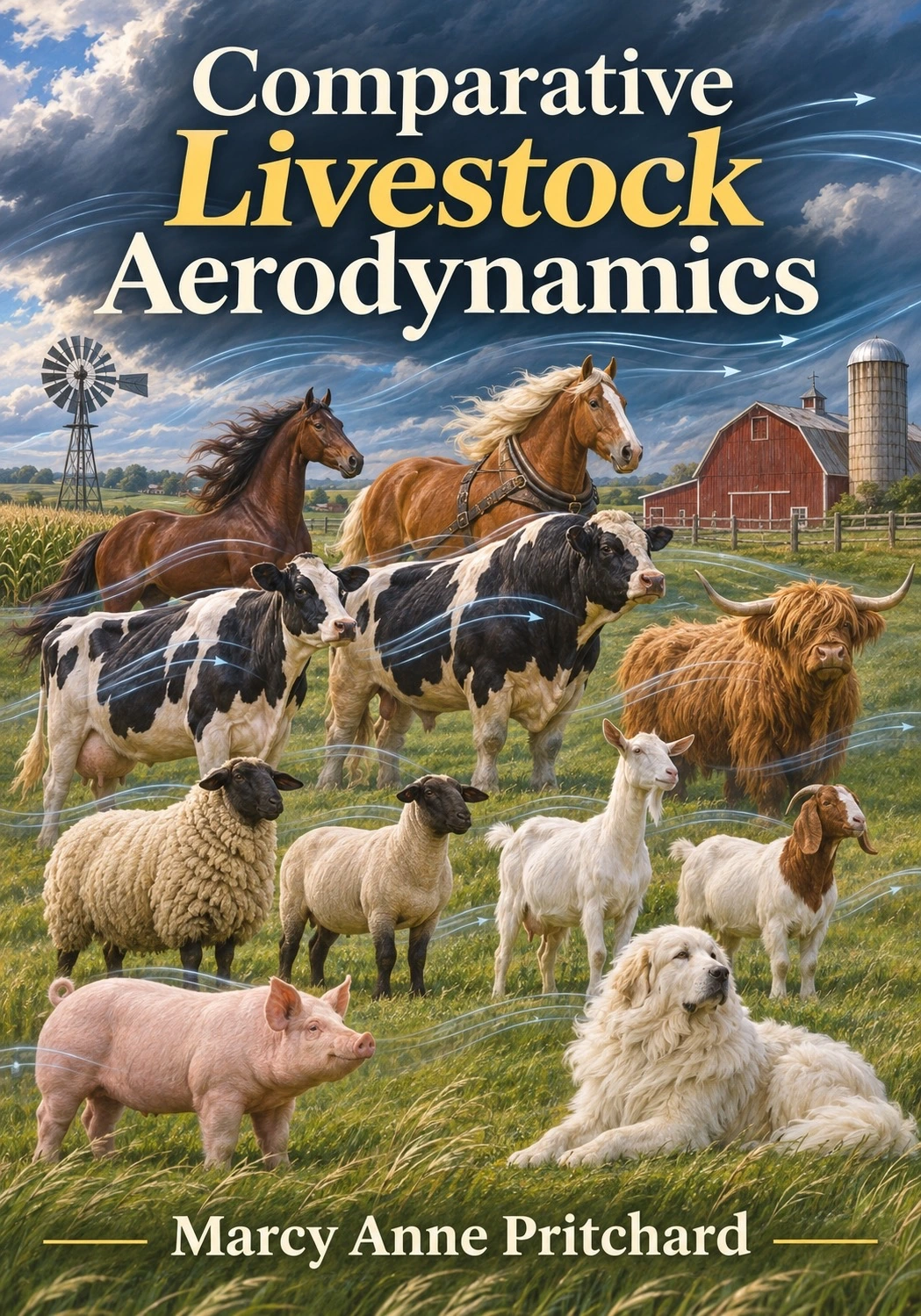
Comparative Livestock Aerodynamics
Marcy Anne Pritchard
It started with the goats during a storm in the summer of 2025. I'd spent plenty of time working around animals in bad weather, but that day got me wondering about something I'd never really tried to put numbers to. How much force does a strong wind exert on one of our goats, and how would that compare with a cow or a horse?
Once I got into it, there was a lot more to consider than the weight of the animal. Think about one of our Highlands with all that hair, a Suffolk before shearing and a Morgan standing out in the same wind. They present very different shapes and surfaces to the air, and the direction the wind comes from matters too.
I settled on eleven animals for the comparisons. I don't have wind-tunnel measurements of our livestock, so I've been careful to distinguish the forces I can estimate from the ones we'd need to measure.
If you're curious about animals or enjoy a bit of applied physics, I think you'll have some fun with this one. There's also a little computer program I put together so you can try some of the comparisons yourself.
Marcy Anne Pritchard With research assistance from Emma Keller
Forthcoming — late 2026
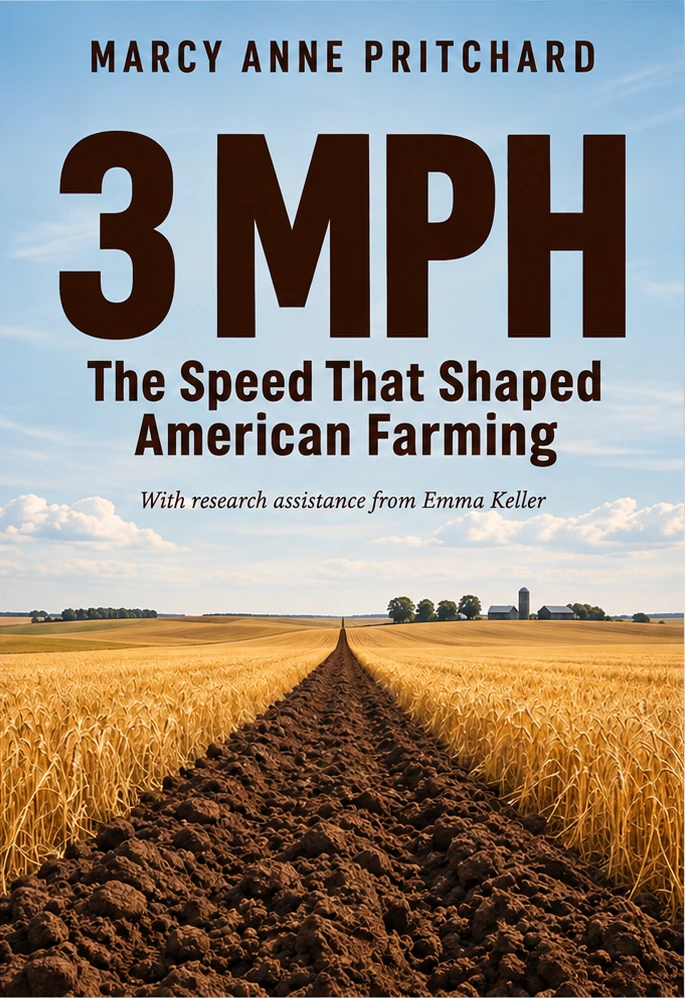
Half a mile an hour doesn't seem like much when you're driving into town. Spend ten hours pulling an implement and you'll notice the difference it makes. And sometimes slowing down that half mile an hour will get you a better job.
That got me interested in the speeds our grandparents and the folks before them worked at. A team of horses and a plow, an old tractor and a modern Steiger may have very little in common to look at, but they all have to contend with the ground they're working. I wanted to find out which of those old working speeds carried forward and which changed as the machinery did.
The book follows the work from tillage and planting through spraying, haymaking and harvest. Emma helped me with the research, and we had plenty of opportunities to compare what we were reading with the machinery we actually use. We even got into the differences between the way she and I harvest milo.
There are days when the combine has plenty of power left and I still don't want to push it any harder. I'm interested in how those limits have changed over the years. What matters to me at the end of a pass is how much grain I've got in the tank and how much I've left on the ground.
Both books are with Grey Barn Farm Publishing. You'll find purchase information and accompanying resources on the individual book pages as they're available.