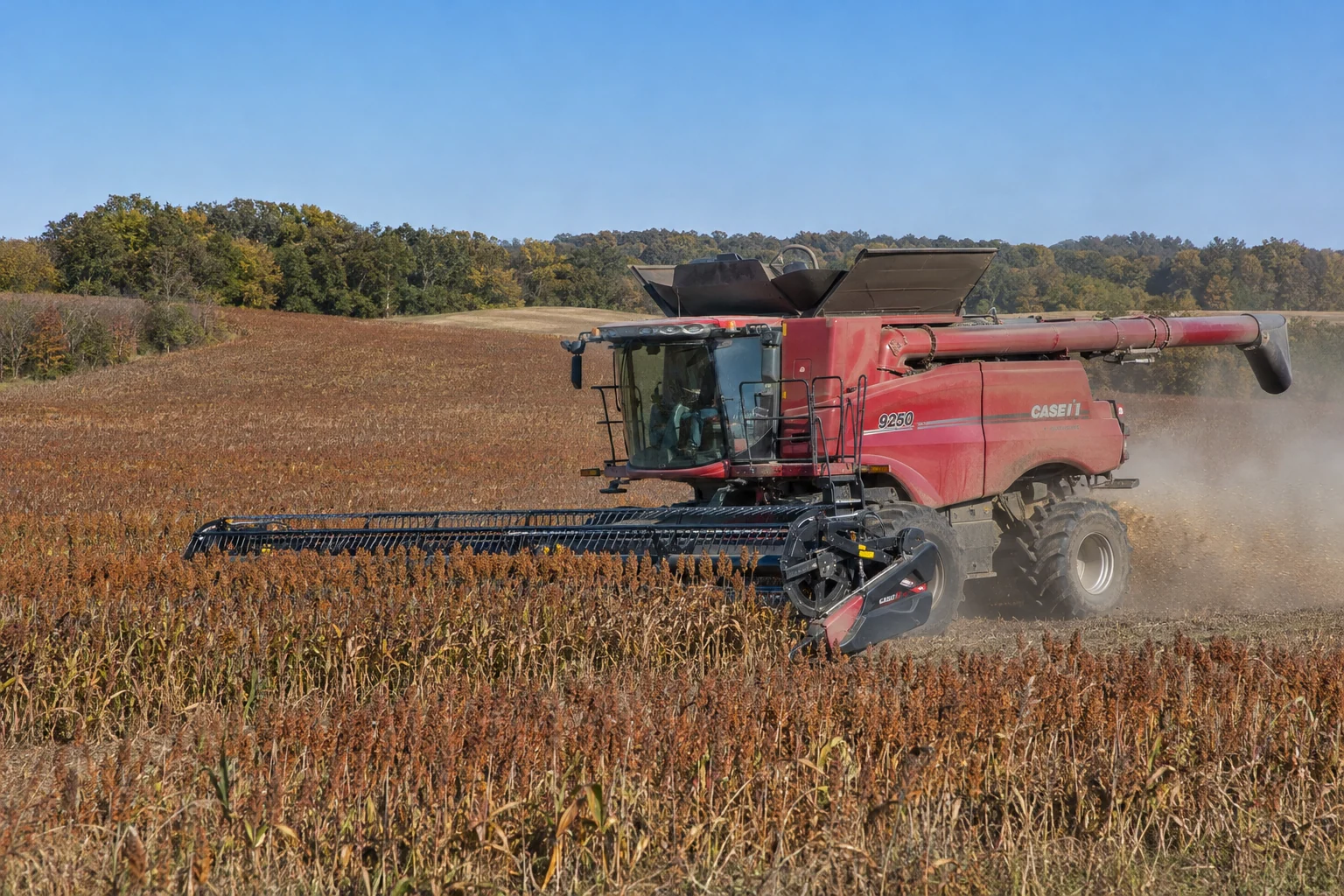
The combine
Case IH Axial-Flow Class 9
The 9250 is a Case IH Axial-Flow Class 9. We use it for corn, beans, wheat and milo, changing headers to suit the crop. I run a draper for milo rather than a dedicated sorghum head.
Anna, Illinois
My Farm
Here's some of the equipment we use, from the combine and the big Steiger to the tractors that spend most of their time doing chores.
We keep a mix of newer and older machinery. If a machine still does a good job and we can get parts for it, I'm not in much of a hurry to replace it. When it starts costing us too much time in the field, though, we'll have to think about something different.
We traded combines in 2024, which was a fairly big change for us. It's given us more capacity at harvest, but there's plenty of older equipment still earning its keep.
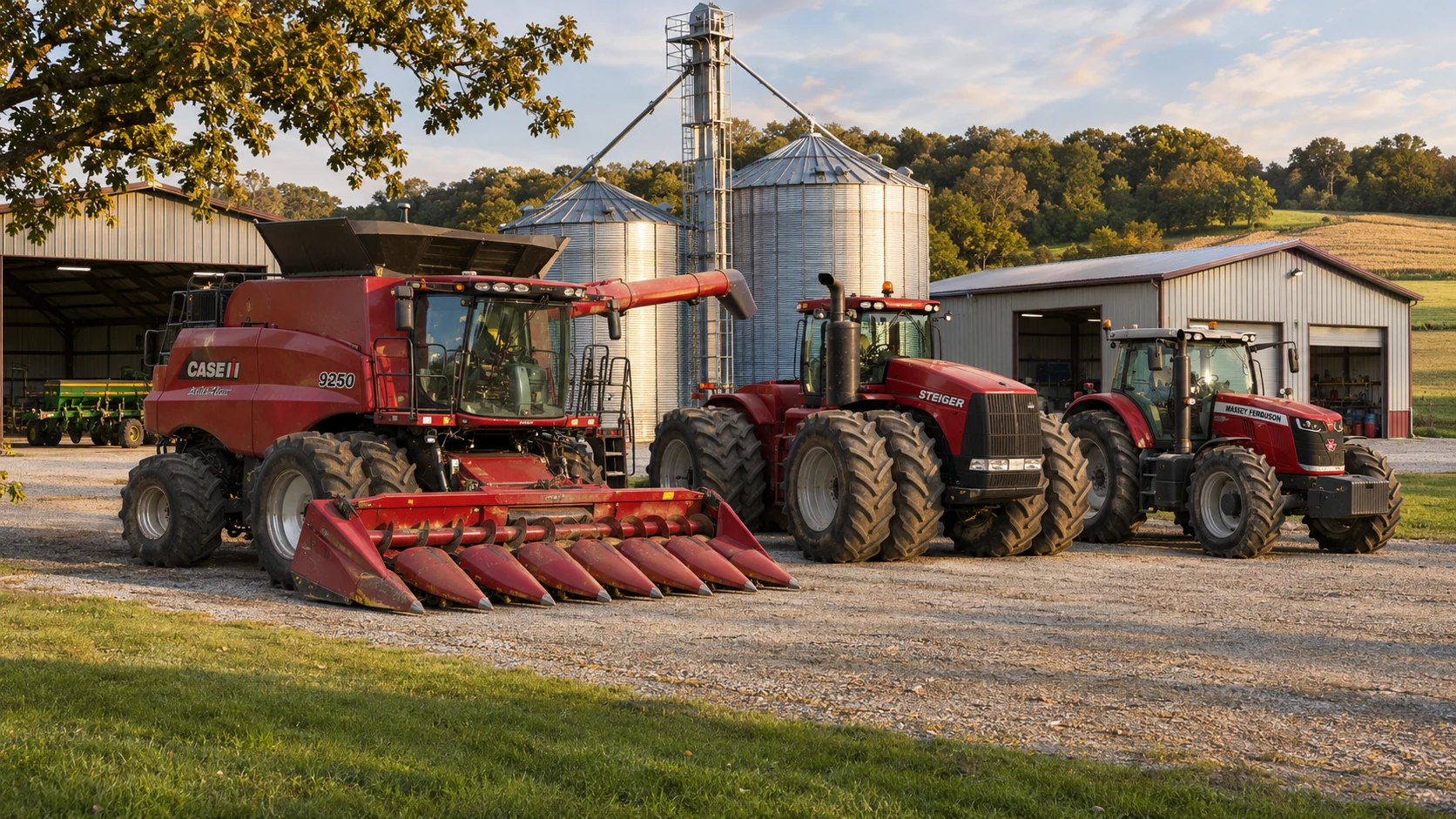
The Case IH and Massey Ferguson machines do most of our fieldwork.
Case IH Axial-Flow Class 9
The 9250 is a Case IH Axial-Flow Class 9. We use it for corn, beans, wheat and milo, changing headers to suit the crop. I run a draper for milo rather than a dedicated sorghum head.
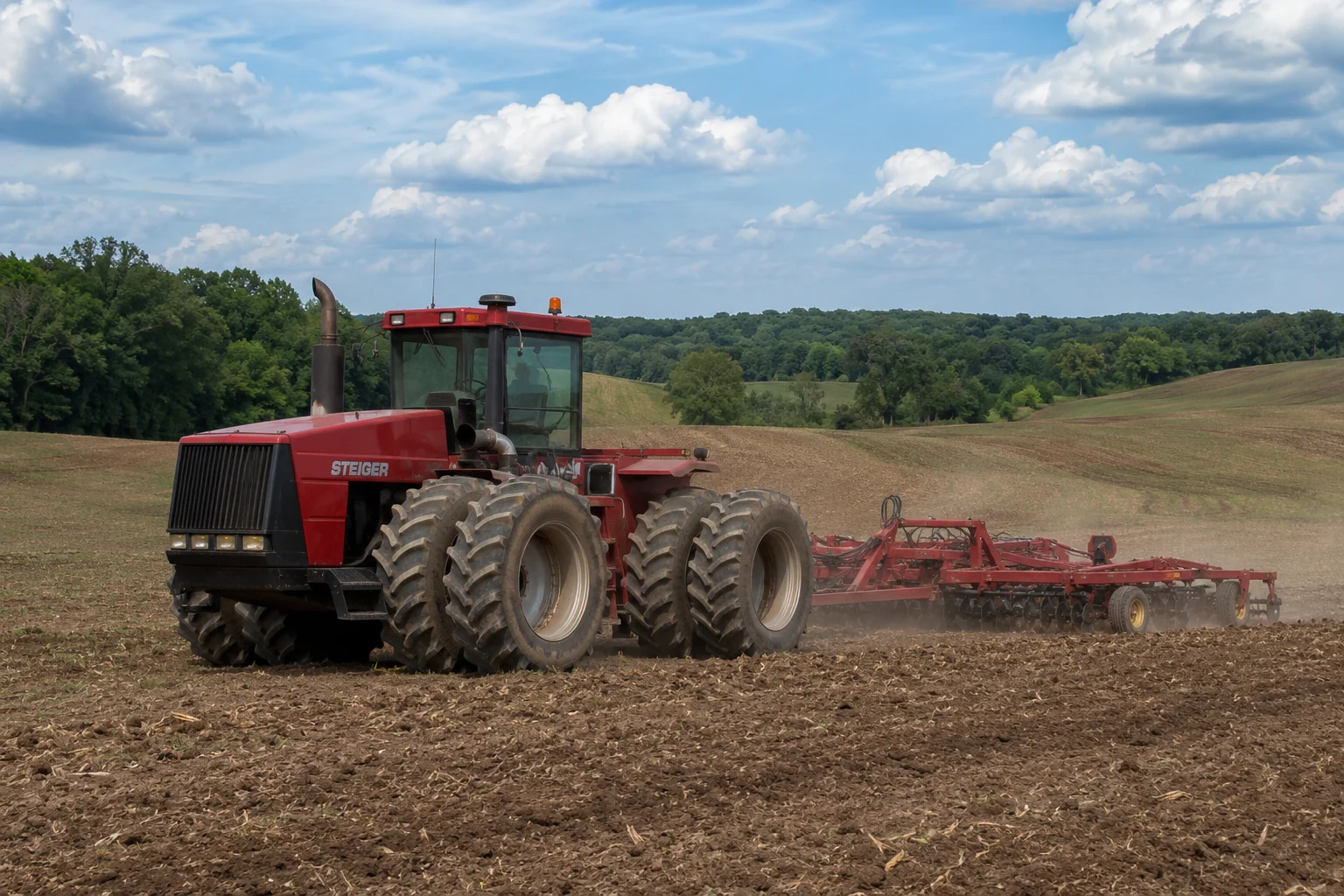
Steiger for the bigger pulling jobs
I generally want the Steiger on the heavier tillage tools. We've got rolling ground, and I appreciate having enough tractor to pull an implement steadily uphill without working a smaller tractor too hard.
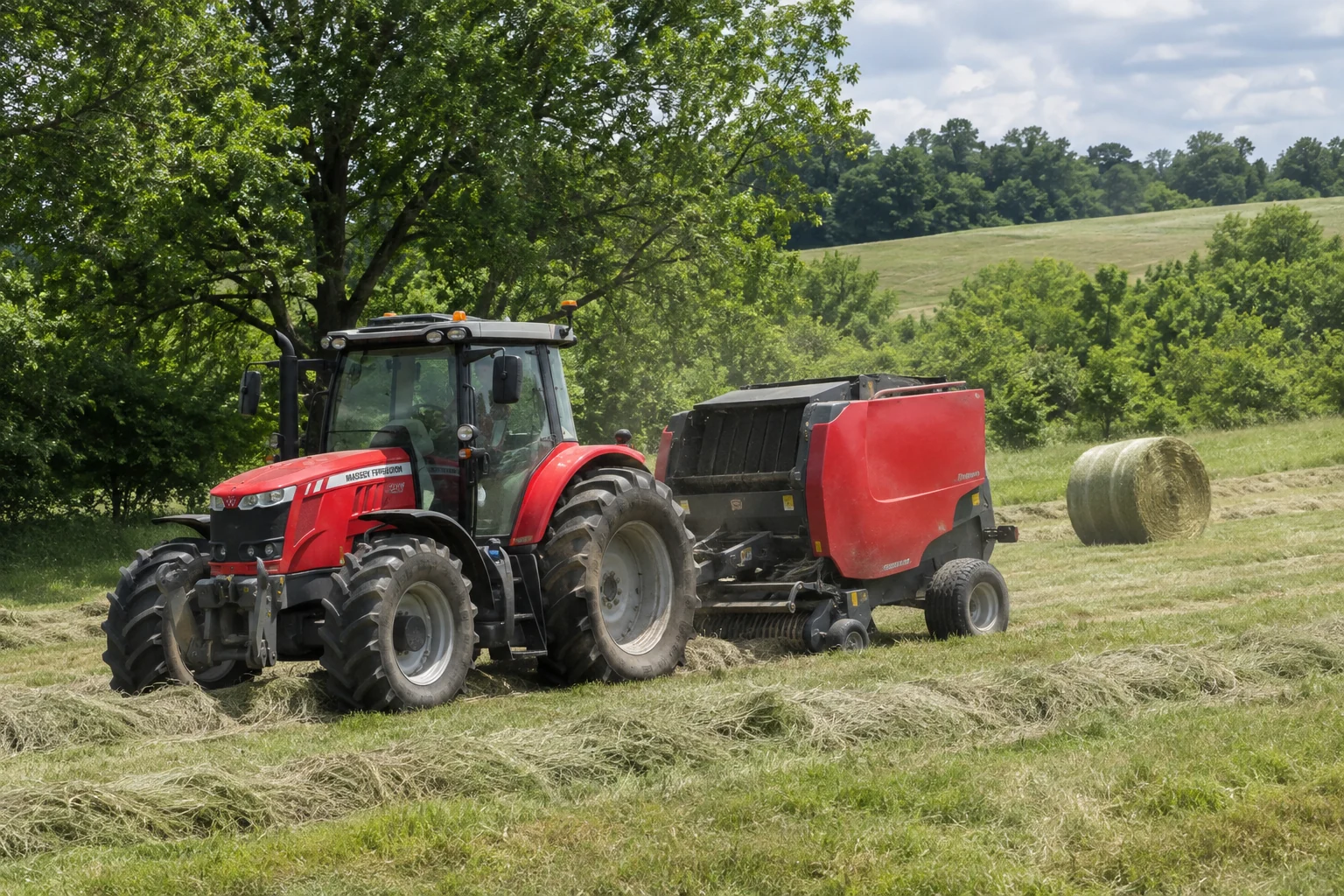
Massey Ferguson for chores, hay and lighter field work
Our Massey Ferguson tractors get used for hay, loader work, moving wagons and plenty of smaller field jobs. It's nice to have a tractor that can spend the morning moving bales and be hooked up to something else by afternoon.
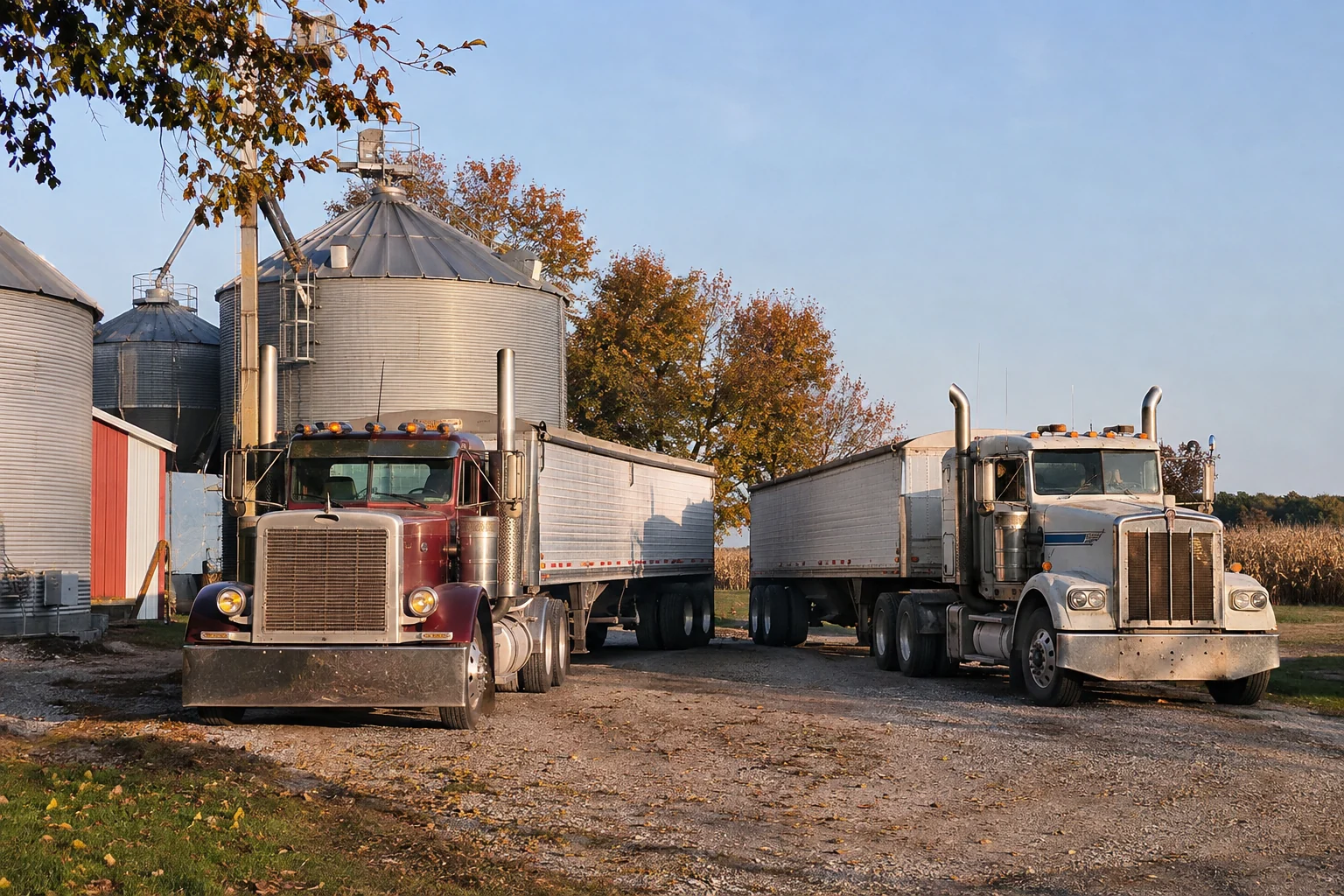
We've got a Peterbilt 379 and an older Kenworth W900L for hauling. It takes a little planning to keep the trucks where we need them at harvest, particularly when we're working a field some distance from where the grain's going.
The Peterbilt does most of the hauling. I'll often take the Kenworth instead if a field entrance is muddy or rutted.
We've got planters, drills, tillage tools, mower-conditioners, balers, wagons and augers to keep in shape, too. When I start getting equipment ready for a job, I try to remember what we'll need for the next part of it.
In hay season, for instance, I want to know the baler's ready before we get much hay cut. I don't want to discover a bad bearing when the hay's dry enough to bale and there's rain coming.
Before we buy a machine, I want to know how much of the servicing we can do ourselves and where we'll get parts for it.
Land & crops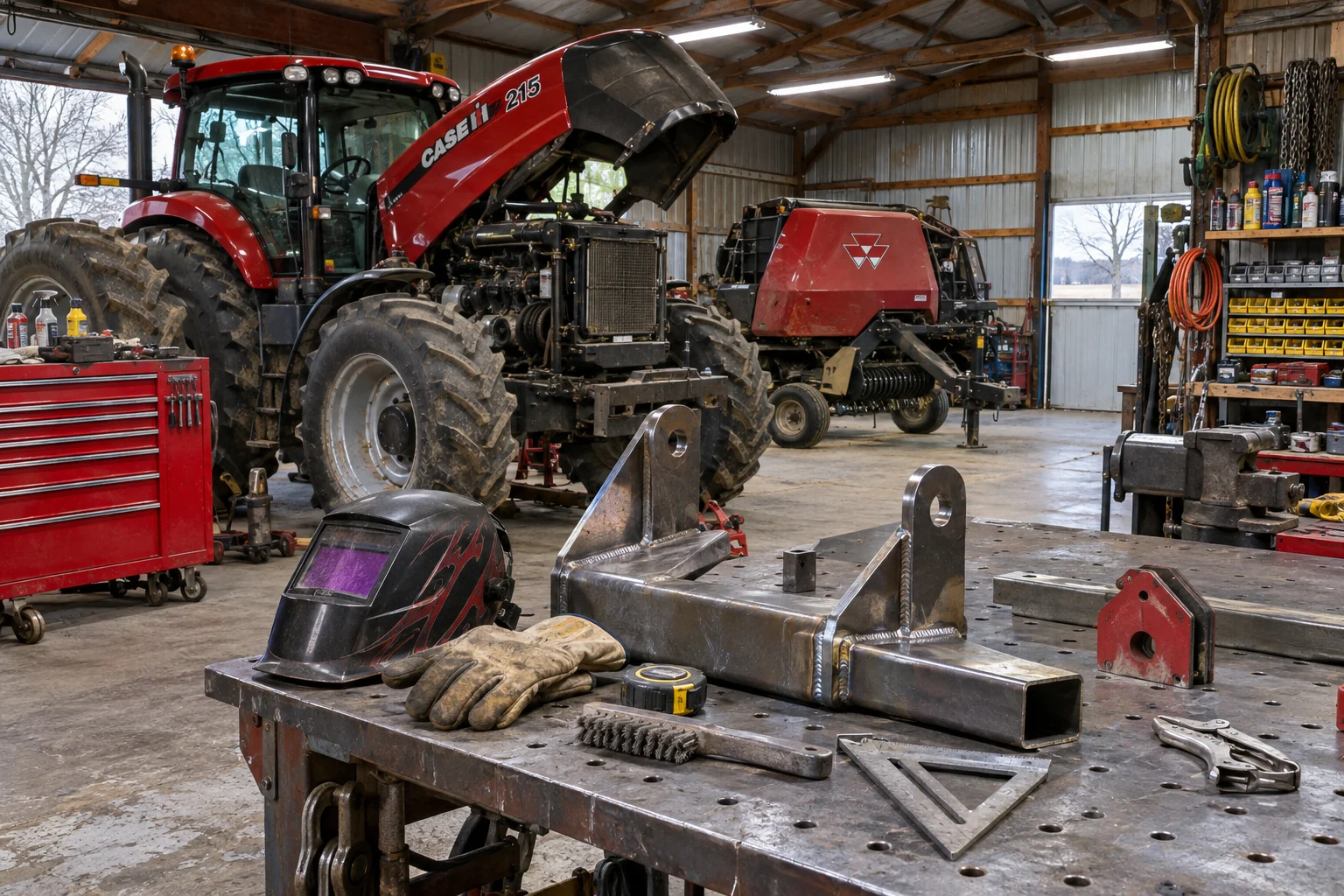
I'm happy to get out the welder when we've got a bracket to repair. I like to look at where the old piece failed before deciding how to fix it. There's no sense putting the same weak spot back into a repair if I can avoid it.
Sometimes the repair's simple enough to do right here. Other times we've got to order parts or get somebody else to look at it. It's a lot easier to have that conversation in January than with beans ready to cut.
Before we take a machine out for the season, we go over the grease points, fluids, belts, chains and bearings. I like to keep a list of things I've noticed while running it, so I don't forget about a small problem by the time we get around to servicing it.
When we're looking at another piece of equipment, one of the first things I want to know is where it'll save us time. Sometimes we're better off making an improvement to what we've already got. And for the smaller jobs, I don't need to get the biggest tractor out of the shed.
Emma and I got into some of the differences between working speed and actual capacity when we were researching 3 MPH. It doesn't matter how wide an implement is if the tractor can't pull it at a suitable speed.
BooksI try to think about what we actually need for our acreage, our crops and the livestock. Emma and I occasionally borrow equipment from each other, which helps when there's a job neither of us needs a machine for very often.
I'd rather spend money on something we'll use regularly than buy another machine that mostly takes up space in the shed.
Livestock