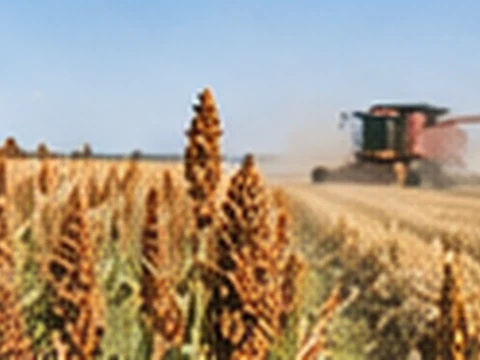
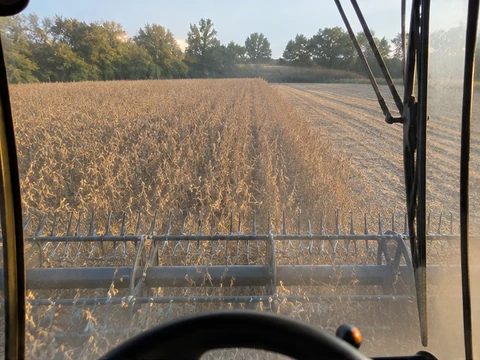
We've been busy with corn and beans, with more milo still to cut. The beans with green stems have been keeping me occupied. I'll change speeds as the crop dries through the day, rather than trying to run the same speed from morning to evening.
Both trucks have been busy. It's nice when I can finish a pass without having to stop partway down for an empty truck. With the shorter days and chores at the barns, there's not a lot of daylight to spare.
Emma and I have been comparing notes on milo again. Her MiloStar and my draper bring different amounts of stalk and leaves into the combine, and I'll be interested to see how we both get along as the stalks dry down.
I've been getting some more of 3 MPH written in the evenings. It's slow going when we're harvesting, but I'm pleased with how it's coming along.
Half a Mile an Hour
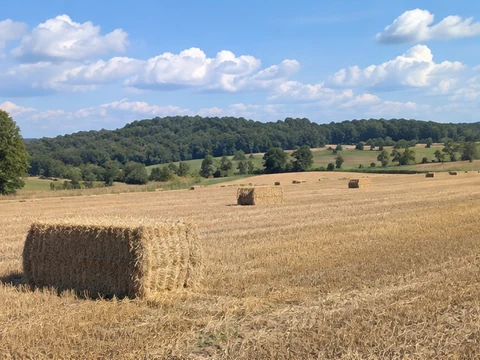
The wheat's out, and we've got straw to pick up and hay to bale. Emma and I got to talking about how fast we'd been able to cut our wheat this year. It's interesting how two quite different combines can wind up working at much the same speed.
An extra half mile an hour, from three to three and a half, adds up over a whole day. It only helps if I'm getting as much wheat in the tank without increasing losses. Emma and I have been looking through some older machinery information as well as our own figures.
For the next few days I'd settle for some decent hay weather.
Spring Doesn't Wait
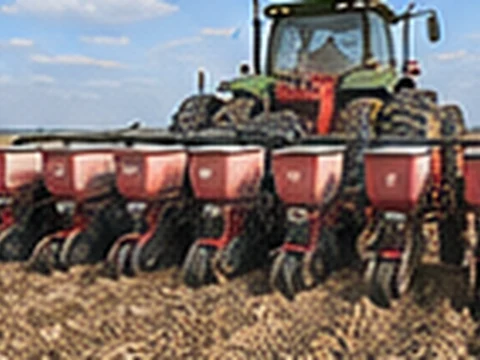
I've been checking the seed we've got on hand and going over the planter. There are a few places in the fields I'd like to have a closer look at before we get started.
I'll be digging behind the planter when we get into the corn, checking seed depth and how the furrows close. The smaller tractors will be busy around the pastures, too. I'm also finishing the livestock aerodynamics book and its accompanying program, and I'll be glad to have them ready.
A Winter Project
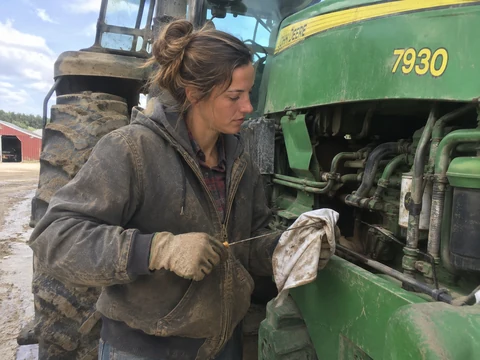
Dad and I have been taking stock of the hay. We need enough of each kind to get through until spring, not just enough bales altogether. There's a tractor to service and a couple of repairs waiting for me in the shop.
When I was feeding the goats the other day, I got to thinking about that storm last summer. I remember how differently some of them behaved when the wind got hold of them. I've been reading about wind pressure in the evenings and doing a little figuring in a notebook. How much difference would it make if a goat were standing sideways to the wind rather than facing it? I don't know the answer yet.
It's turned into an interesting way to spend a winter evening. During the day I've still got plenty to do out in the shop.
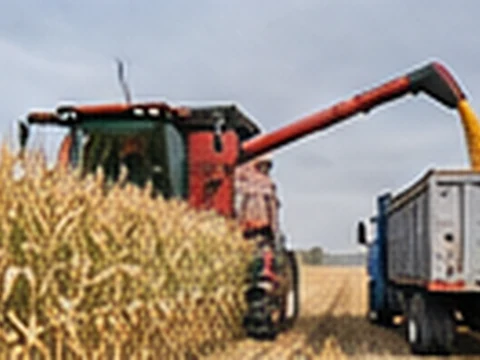
We've got the corn head on the 9250, and the corn harvest's under way. I'm watching the beans fairly closely, too. Some of the corn came ready earlier than the rest, and I'd sooner keep cutting it than move into beans that are still too tough.
This is our second fall with the 9250. It takes me less time to find the settings now than it did a year ago. The draper's ready for the beans and milo whenever we get to them.
That Was Quite a Storm
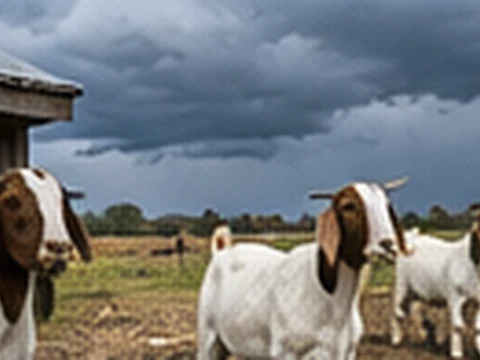
We had quite a storm blow through here a few days ago. It came up in a hurry, and for a while we had some fierce wind along with the rain. I'd been keeping an eye on the goats. A few of them braced themselves, and others turned or headed off toward a place where they could get out of it. I hadn't seen them react quite like that before, and I was mighty glad when the wind let up.
Once the storm had passed, we went around checking the animals, gates and fences. There were branches down in a few places and water standing where I'd rather not have had it. We looked at the roofs and made sure we hadn't missed any damage to the fences before getting on with the day.
The goats were fussing over their feed again soon enough. We've got hay work waiting on the weather, though the pasture could certainly use some of that rain. I'd take the rain without the wind next time if I had a choice.
Back in the Tractor
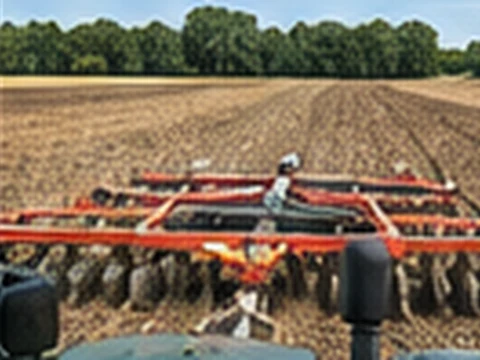
I've finally had some time back in the Steiger. The ground was ready for it in one of the fields, and I made a few rounds before getting out to see what the implement was leaving behind. A couple of adjustments made quite a difference.
There are other fields that aren't ready yet. We'll leave those alone for now and cut back on the number of passes where we can.
We're getting the Massey and the planter ready for corn. The pastures are greening up nicely, which is welcome. We'll still be feeding hay for a while, but I always like seeing that first new grass.
The Animals Don't Take Sundays Off
I was glad I'd put on another layer before going out this morning. We've had waterers to check and hay to move, and the dairy barn felt pretty nice after I'd been out in the wind.
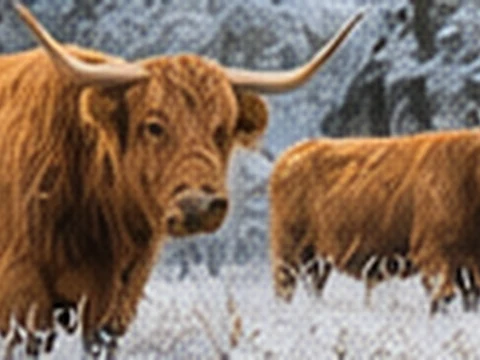
The Highlands seemed considerably less bothered by the cold. I enjoy watching them eating hay with their long winter coats. Willie's pretty comfortable, too. He's better dressed for this weather than I am.
There's some cleaning to do yet. If anybody offered me a day on the combine in exchange for cleaning the hog pens, I wouldn't need much time to think it over. I don't expect to get that offer in January.
Emma and I occasionally borrow equipment from each other. It makes sense if one of us has something the other needs for a job that'll only take a few days. The trouble is that the same weather that gets me in a hurry to do something here often gets her in a hurry to do it on her place, too.
We've been sorting out some of that lately. We'll give each other a little notice, check what tractor or implement is available and make sure the hitch and hydraulic connections will work. There's no point getting a piece of equipment home and then spending the afternoon trying to find the right fitting.
If I borrow a tractor, I try to return it with the fuel replaced. If I've noticed something that needs attention while I've been running it, I'll tell her. I'd appreciate knowing the same thing when she borrows ours. I also want us both to be clear about when she needs it back. If the weather changes and I can't finish the job when I thought I would, I'd rather call her than leave her wondering whether she'll have a tractor when she needs it.
We're not running all the same brands, so we check the connections and settings before we take a borrowed machine to the field. Neither of us wants to buy another implement that'll sit in a shed most of the year.
The New Combine
We've traded our older combine for a Case IH Axial-Flow 9250, a Class 9 machine. I've been looking forward to getting it into the wheat, and now I've had a chance to spend some proper time in the seat.
There's a difference between knowing what you want a combine to do and knowing where to find all the settings on a different machine. I've been making adjustments a little at a time, checking the sample and looking behind me. I like having the extra capacity when the wheat's feeding heavily. It'll be interesting to see how we get along in corn and milo this fall.
I was a little sorry to see the old combine go. I've cut a good many acres with it, and I've spent quite a few hours working on it. I suspect I'll get over it once I've had a few long days in the new one.
We've got straw and hay to deal with first.
Waiting on the Ground
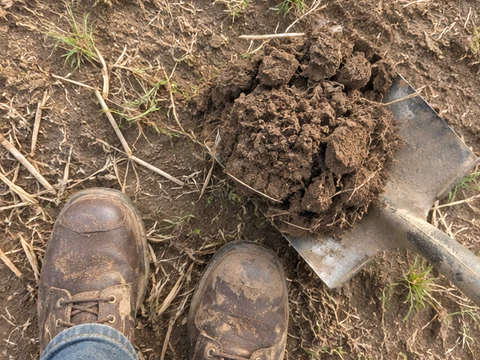
I've been out with a spade looking at some of our ground. A couple of the higher places are drying well, but you don't have to go far down the slope to find soil that'll stick to just about anything. I brought a good portion of it back to the house on my boots.
We've been checking the planter and its seed openers. I'd rather have it sitting ready in the shed than be planting into ground that's still too wet. A field can look pretty good on top and be a different story down where the openers are working. I'll go back with the spade after a few more days of drying weather. At least the wheat's greening up.
A Few Days in the Shop
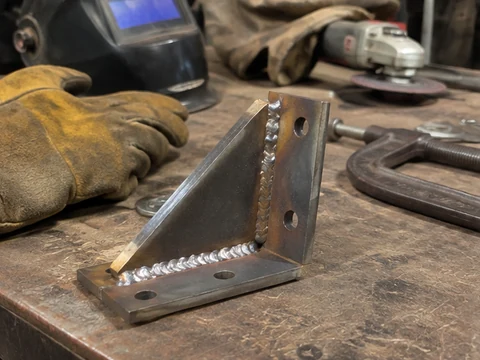
I finally got around to the bracket I've been meaning to fix since last fall. After taking it off, I could get a good look at where it had cracked and fit up a replacement. With any luck that'll be the last I see of that particular repair for a while.
Dad and I have been going over the equipment list. We've got oil and filters to change and a few bearings to look at. I like to order parts in January if we know we're going to need them. Waiting on a bearing isn't nearly as aggravating now as it'd be with a field half planted.
We're getting into the beans, and our old combine's been keeping me busy. It's got some years on it, and there are days when I spend a little more time listening to it than I'd like. When the beans are feeding nicely, though, it's a pretty enjoyable place to spend an afternoon.
The beans can be tough first thing in the morning. By afternoon they usually feed better, and I can make a little more progress. I get out to look for beans behind the machine before deciding whether I can go any faster.
We've been hauling, too. By the time the last truck's gone and I've got back to the house, I'm usually ready for supper and not much else. I'm still looking forward to getting back in the cab tomorrow.
Wheat's In, Hay's Next
We've got the wheat out, and we're trying to get the straw picked up and more hay put away. With the number of animals we've got, we can find a use for quite a bit of straw.
A good day for picking up straw is generally a good day for cutting or baling hay, too. Dad and Julie have been busy, and we've still got milking and feeding to fit in. Supper's been at rather variable hours lately.
I've been looking at the corn and beans whenever I'm out that way. The corn's beginning to shade the ground between the rows. I'll be glad when the hay's under cover and we can take a little more time to look at the crops.