The weather has a lot to say about what we're doing in the fields, but so does the kind of ground we're on.
Union County, Illinois
My land
The ground around Anna rolls more than people sometimes expect from Illinois. One part of a field can dry out well ahead of another, and the soil doesn't always behave the same way from one end to the other.
Of our 480 acres, about 230 are in grain crops, 100 in hay and forage and 124 in permanent pasture. The two ponds take up roughly six acres between them.
We change the crop mix from year to year as we work through the rotation. Some of our fields are better suited to a particular crop than others, and the weather can change our plans in a hurry.
The main crop ground
What we grow
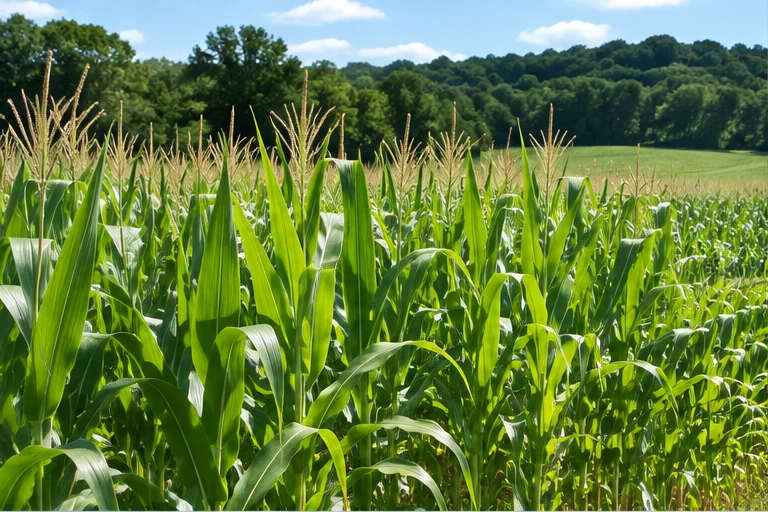
Corn
When we start planting corn, I'll stop after the first few rounds and dig up some seed to see where the planter's putting it. It's much easier to correct the depth then than to discover an uneven stand in June.
We sell grain corn and keep some for livestock feed. At harvest, I can often see where the corn had trouble earlier in the year.
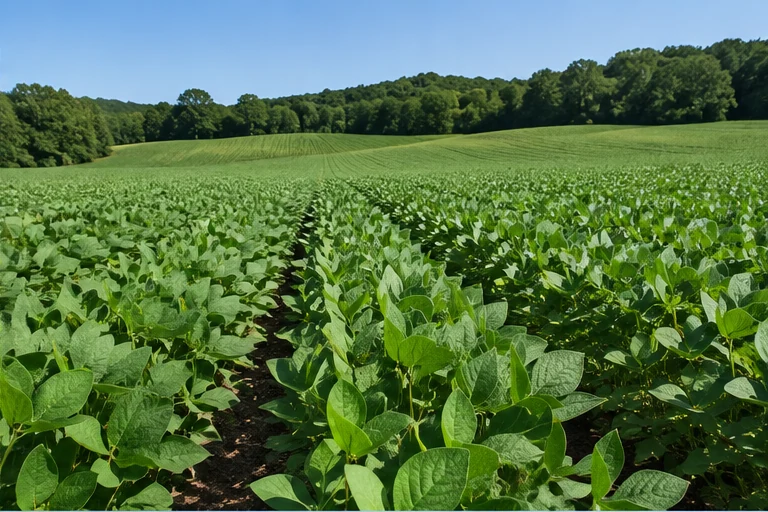
Soybeans
Beans fit well in our rotation. Once the plants have filled in, I like to walk out into the field and look at the pods. Sometimes the plants farther in aren't nearly as good as the ones I can see from the road.
When we're cutting beans, I keep the cutterbar low enough to pick up the bottom pods. If the stems are still green, I'll adjust the ground speed to keep the crop feeding evenly. Conditions can change considerably between morning and afternoon.
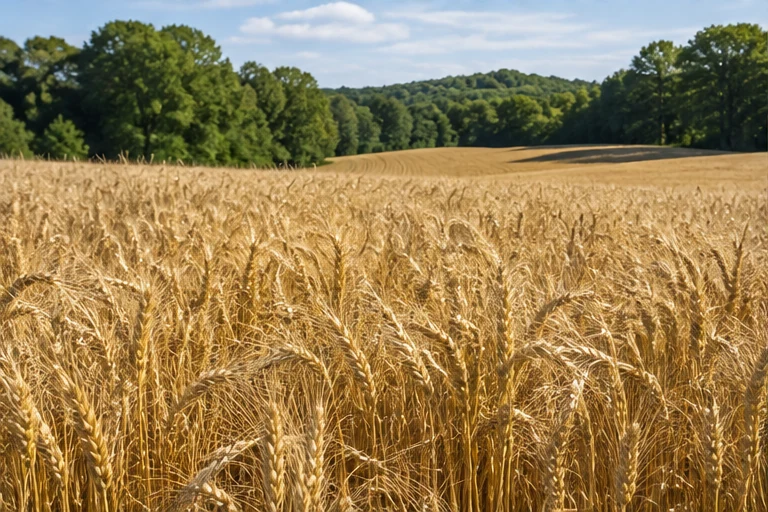
Winter wheat
I like having winter wheat in our rotation. We drill it in the fall, and it's nice to see it green up in spring while we're getting ready to plant corn.
Getting the wheat out early in the summer gives us a chance to plant some double-crop beans when conditions are right. We also bale straw for bedding. With the number of animals we've got, we can use quite a bit of it.
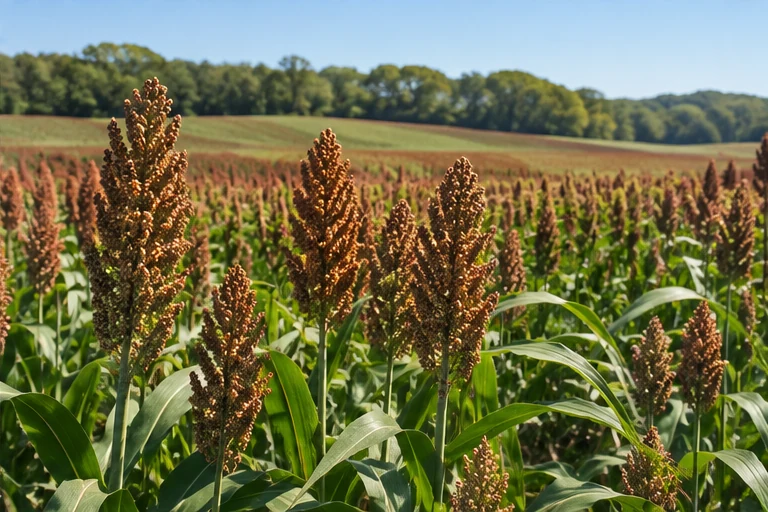
Grain sorghum (milo)
We call it milo. It's a useful crop here, particularly when we get hot, dry stretches in summer. It still needs moisture, of course, and having it in the rotation helps spread out some of our fieldwork.
I harvest our milo with a draper on the Case IH 9250. Emma's family uses a Geringhoff MiloStar, which is made specifically for sorghum. We have to handle different amounts of stalk and leaves along with the grain, and that gives us plenty to compare at harvest.
The livestock side
Hay & forage
I watch the forecast closely when we're getting ready to mow hay. There's not much to be gained by cutting early if it won't have time to cure before the next rain.
A milking Holstein, a horse and a sheep don't all need the same quality or kind of hay. We get some of their feed from pasture in the growing season, buy additional feed when we need it and put up much of our own forage.
Residue from the previous crop and the seedbed we'll need for the next one help determine how we work a field. I don't necessarily want to till the bottom of a slope the same way I'd till the top.
We use different tillage approaches depending on the field and crop. We also make use of cover crops such as rye or radishes when we've got time to fit them in. I'll decide what to do based on the condition of the particular field.
Once the crop's coming into the combine, we've got to keep up with hauling it. How much we can get done depends on where the grain's going, its moisture and how soon we can get another empty truck back to the field.
The two trucks give us some flexibility. In a field with a poor entrance, I'm especially glad we've still got the old Kenworth.