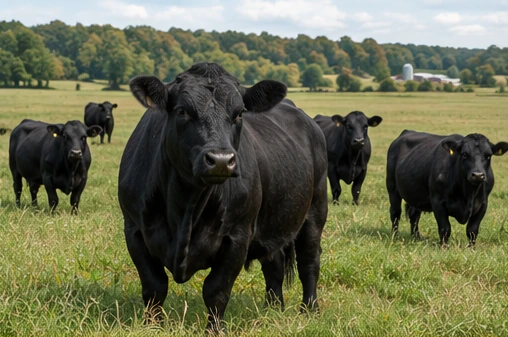
Angus
About 20 head
Our beef cattle are Angus. When I check them, I pay attention to which cows are grazing, which calves are staying with their mothers and whether anybody's off by herself.
Anna, Illinois
My Farm
Here's a look at the animals we keep. Some of them have very different needs, even when they're out in the same sort of weather.
Some of our animals are raised for sale, others for milk. We've also got horses and poultry.
We’ve got about 124 acres of permanent pasture and another hundred acres in hay and forage. The numbers of animals we keep change a bit over the course of a year, particularly when there are young animals coming along and others ready to sell.
About 20 head
Our beef cattle are Angus. When I check them, I pay attention to which cows are grazing, which calves are staying with their mothers and whether anybody's off by herself.
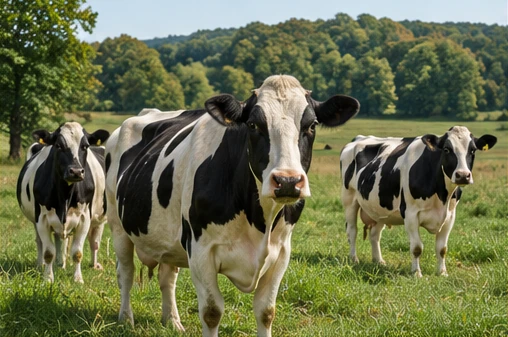
About 40 head
The Holsteins account for much of our work around the dairy barn. We pay particular attention to what goes into their feed. A bale that's perfectly good for a dry cow may not be what I want for one that's giving milk.
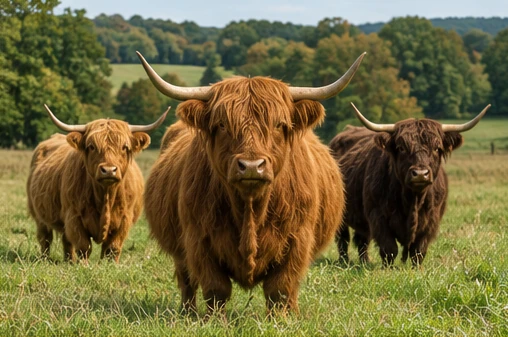
3 cows
I’ve got a soft spot for our three Highland cows. I enjoy looking at them, particularly when they’ve grown out their winter coats. They’re rather different cattle to work around from our Angus. Those horns take up a surprising amount of room, and I keep that in mind when I’m working close to them.
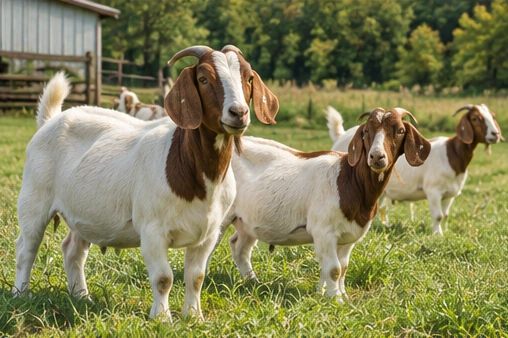
About 30 head
We keep Boers for meat. If I’ve got some fence work to do where the goats are concerned, I look for the little places I might not have thought about with the cattle. Goats are pretty good at finding them for me. They like to browse, and they’ll pick at things the cattle have walked right past.
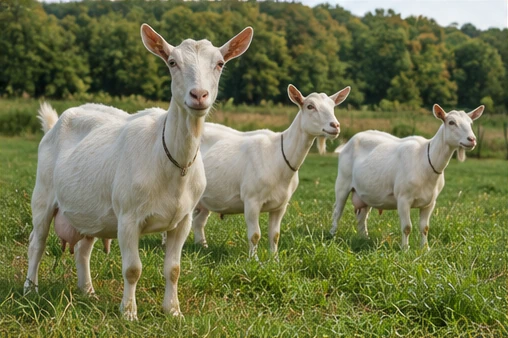
About 50 head
The Saanens are our dairy goats. There's some overlap with looking after the Holsteins, but the goats have different feeding and housing needs. I particularly want them to have somewhere dry to get out of the rain.
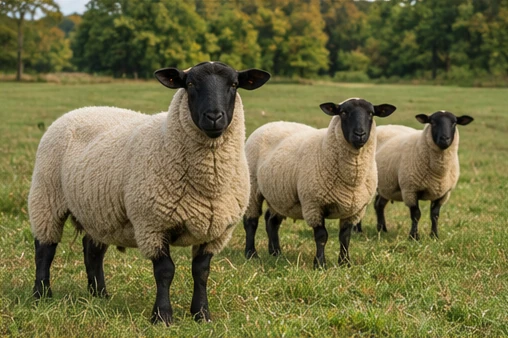
About 40 head
We’ve got a flock of Suffolks. I enjoy going out to see how the lambs are getting along. There’s some crossover in the work we do with the goats and sheep, particularly when it comes to pasture and keeping an eye on parasites. I’m careful about what feed and minerals the sheep have access to, since the goats can tolerate more copper than the sheep can.
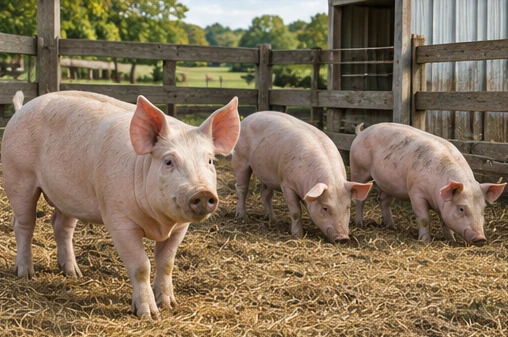
About 75 market hogs
We raise Yorkshire market hogs. They've got to have clean water, suitable feed and bedding. I keep an especially close watch on them when the weather gets hot.
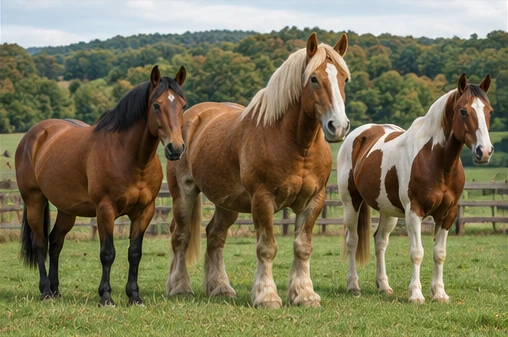
Several horses
We've got Morgans, a Belgian draft horse and an American Paint. I'm fond of the Belgian, though I've never had to depend on a horse to put in a crop. We keep up with their hooves, feed and fencing, and I like having them around.
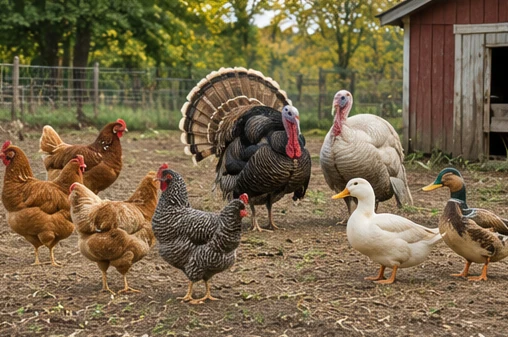
A few dozen birds
Between the chickens, turkeys and ducks, there's always something to check on. I make sure they've got clean water and somewhere secure to spend the night. The ducks are particularly good at undoing my work with the waterers.
I like to see a good stand of grass left behind when we move animals off a piece of pasture. There’s not much point in getting every last mouthful out of it if we’ve left ourselves with poor grazing the next time around.
We put up a fair amount of our own hay and have straw from the wheat for bedding. We buy feed, too. I’d rather figure out what we’re going to need for winter while there’s still time to do something about it than find out we’re short of hay in February.
Land & cropsWe use our ponds for livestock water, but we keep the animals' access to the banks under control. I don't want them trampling all the way around either pond.
In July and August I check that the animals have enough water and somewhere to get out of the sun. In winter I want dry bedding and shelter from the wind.
StewardshipWillie's my Great Pyrenees. He's a livestock guardian dog and spends a lot of his time with the sheep and goats. He's got his own job to do while we're off doing ours.